

Vacuum tube computers—now we’re getting into the era of truly electronic computing! These machines, which emerged in the mid-20th century, replaced the slower electro-mechanical relays with vacuum tubes, significantly improving speed and efficiency.
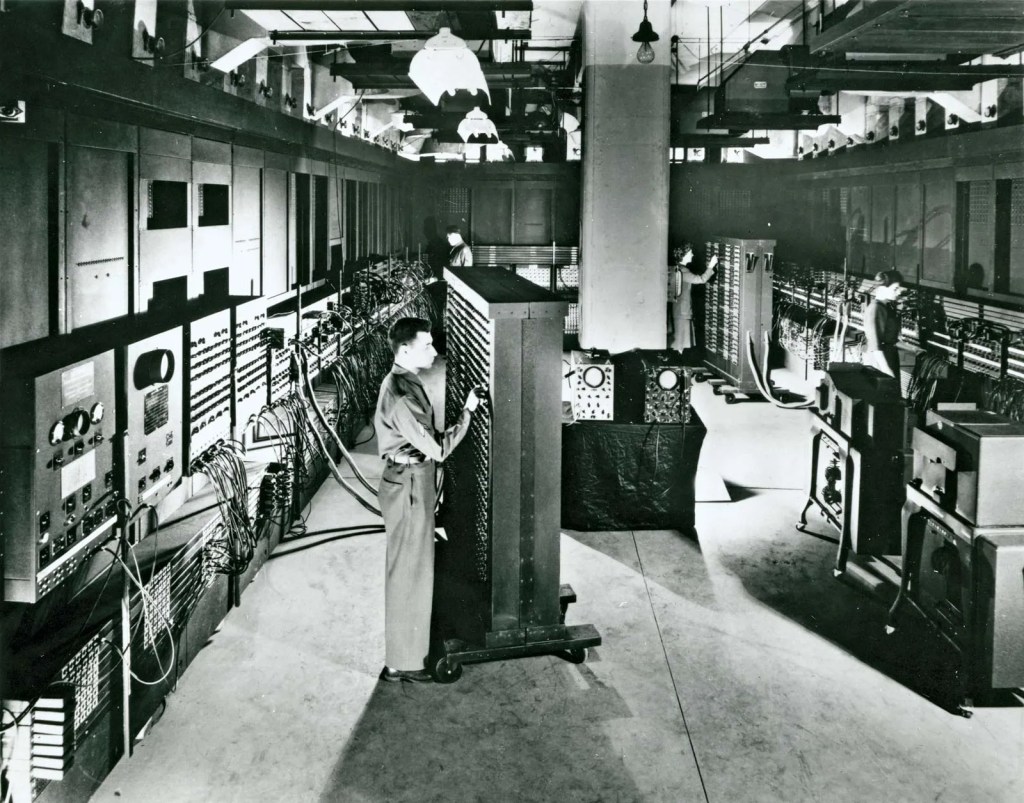
Vacuum tubes acted as electronic switches, allowing computers to perform calculations much faster than their predecessors. The first notable example was the ENIAC (Electronic Numerical Integrator and Computer), built in 1945. It was a giant, room-sized machine with over 17,000 vacuum tubes, and it could execute thousands of calculations per second—revolutionary for its time! However, vacuum tubes generated a lot of heat and were prone to burning out, meaning maintenance was a constant challenge.
These computers were programmed using hardwired configurations, punched cards, or early assembly languages. They set the stage for transistor-based computers, which were smaller, more reliable, and much more efficient.
 My AIM on Artificial Intelligence Machines